Recently, a friend and colleague reached out to me for advice about becoming a foster parent. She is also a military veteran, someone I have a great deal of respect for, and more recently, a survivor of a serious car accident that left her having to learn to walk again. She has faced some significant challenges in her life, yet she is now considering opening her home and her heart to children through foster care. She reached out to me because she wanted to better understand what that experience might look like.
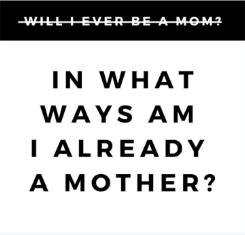
During our conversation, she told me she had a heart so big and full of love and wanted the opportunity to share that love with children who needed it. She also mentioned that she was now in her forties and had accepted that she probably wasn’t going to have the opportunity to become a “real mom.”
That statement inside our conversation broke my heart.
You see, my friend had experienced pregnancy. She had carried a son, but tragically, he was stillborn. She never got the opportunity to bring him home, raise him, or experience the milestones that so many parents look forward to.
And yet, here she was, telling me she wasn’t a real mom.
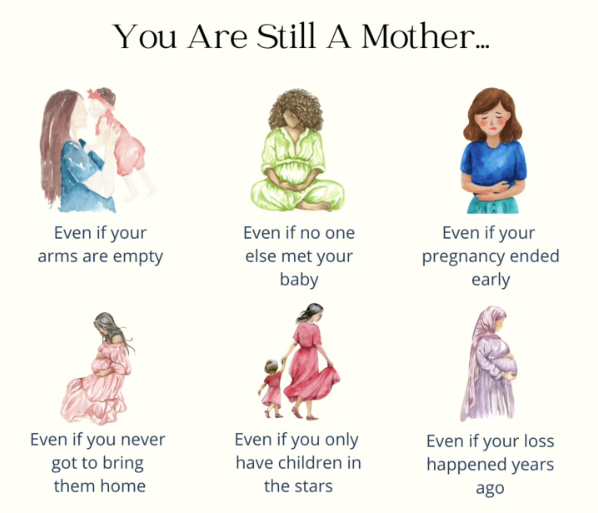
I told her she was already a mother. She had grown a son in her womb, loved him, still loves him, and experienced a loss that no parent should ever have to endure. She didn’t get the opportunity to raise her son, but that doesn’t mean she stopped being his mother. He is still her son, and she is still his mom, even though her baby now resides in Heaven.
I want to be careful about how we define motherhood, because I don’t believe that pregnancy or childbirth alone is what makes someone a mother.
I’ve had a couple of experiences in my own life that have shaped how I think about that.
During one of my military deployments, my unit started calling me the “Crew Mom.” It became such a part of my identity within the group that they even gave me a hat with the word “Mom” on it.
I wasn’t their biological mother, obviously. But somewhere along the way, I had become someone they associated with that role. Someone they could count on, someone who looked out for them, and probably someone who wasn’t afraid to tell them what they needed to hear.
What meant even more to me was that after I returned home and started another job, they sent me a Mother’s Day gift. I was no longer deployed with them, but that relationship and what I had meant to them hadn’t disappeared simply because our circumstances had changed.
Then, about 18 months ago, I began providing respite and emergency care for children in foster care. At the time, I didn’t necessarily consider myself a foster parent. My role was to provide a safe, temporary place for children, sometimes for just a few days, while longer-term arrangements were being made with “foster moms and dads”. My title was “Respite & Emergency Care Provider”.
I remember when the first children arrived at my home. I had introduced myself as “Miss Staci,” but as soon as they got out of the car, they were calling out, “Mom!”
I certainly wasn’t expecting that. But I remember thinking, who am I to deny a child what they desire to call me?
If calling me Mom gave them some sense of comfort, security, or belonging, I wasn’t going to correct them. I understood that I wasn’t there to replace their biological mother, but I also wasn’t going to tell a child they couldn’t call me something that felt natural to them.
Over time, I began to see my role differently. I had initially thought of foster parenting as something that involved a longer-term or permanent placement. However, I realized that I didn’t need to have a child in my home for months or years to make a difference in their life or to fulfill that role.
Whether a child stayed for a few days, a few weeks, or longer, I was still responsible for providing the same care, compassion, and sense of security that any child deserves.
Somewhere along the way, I finally became comfortable calling myself a foster parent and even a foster mom.
These experiences reinforced what I already believed. Motherhood isn’t always defined by biology, and it certainly isn’t measured by the amount of time we get to spend with a child – biological or otherwise.
We can be blessed with the opportunity to be that person for a lifetime. Other times, we may only have a few short days, months or years. The length of time doesn’t determine the value of the love or care we provide.
There are women who desperately want children but are unable to conceive. There are women who experience pregnancy loss, women who become mothers through adoption or foster care, and women whose lives simply take a different direction than they once imagined.
None of those experiences should determine a woman’s worth or her ability to love and nurture a child.
I believe many women have an innate capacity for maternal love. That desire to care for someone, protect them, encourage them, and put their needs ahead of our own doesn’t necessarily begin with pregnancy. And it doesn’t necessarily end when a child is no longer physically present in our lives.
For some women, it develops through raising children. For others, it comes through relationships with children they didn’t give birth to. And for some, that love exists even when they never have the opportunity to become a parent.
I think we need to do a better job of acknowledging that.
There is so much emphasis placed on women becoming mothers, often as though it is something we are all expected to accomplish. And when it doesn’t happen, whether by circumstance or choice, women can be left feeling as though they have somehow fallen short.
Not being able to have biological children is not a failure. It is not a sin. And it does not make a woman any less of a woman.
I also think about how often we define motherhood by the things mothers do. Raising children, attending school events, helping with homework, celebrating birthdays, and watching them grow into adults. Those are meaningful parts of parenting, but they are not the only experiences that give motherhood meaning.
My friend never got to experience those things with her son. That doesn’t erase the relationship she has with him or the love she continues to carry for him.
And now, years later, she is considering opening her home and her heart to children through foster care. There is something absolutely incredible and meaningful about that decision, particularly given what she has experienced.
Foster Care comes with its own challenges and responsibilities. Foster care isn’t replacing a child who has been lost or filling an empty space in someone’s life, but it is being willing to provide love, stability, and support to children who may need those things during a difficult time in their lives.
What I want my friend to understand is that she doesn’t need to become a foster parent to prove she has the capacity to be a mother. She doesn’t need to get pregnant or give birth again, adopt a child, or raise a child to prove that her love is real.
She has nothing to prove.
I think this is something we should talk about more openly, especially as women. We need to recognize that families are formed in different ways, that motherhood looks different for different people, and that not every woman will experience the life she may have once envisioned.
And we need to make room for the mothers whose children are no longer here. I know that telling my friend she is a mother doesn’t change what happened to her, or how she feels. It doesn’t give her back the years she should have had with her son.
But I hope it helps her see herself differently because when she told me she wanted to give all that love in her heart to children who needed it, I didn’t hear a woman who had failed to become a mother.
I heard a woman who had experienced motherhood, endured the loss of her child, and still had the desire to love and care for others. She didn’t get to raise her son, but she grew him in her womb. She became his mother, and she will always be his mother.
I also want her to understand that even if she had never experienced pregnancy or the birth of her son, she would be no less capable or deserving of being a mother. The love she has to give, her desire to nurture and protect, and her willingness to open her heart to children who need her are not dependent on biology.
Whatever she decides about foster care, I hope she knows that she doesn’t need to prove she is a mother. She already is one. Her son will always be part of that story, but her ability to love and care for children was never dependent on having given birth to him.
Finally, I hope she knows that her life, her love, and her worth have never depended on motherhood at all.