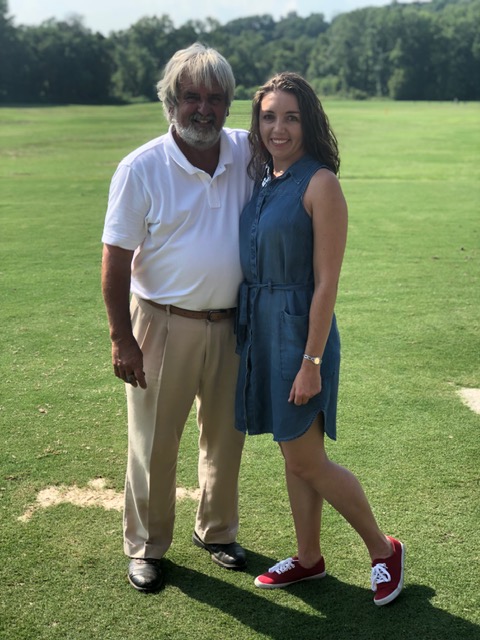
When I was growing up, I spent a lot of time on a golf course.
And like most young golfers, I thought golf lessons were about learning how to play golf.
How to grip the club.
How to position my feet.
How to keep my head down.
How to follow through.
What I didn’t understand at the time was that one of my golf instructors wasn’t solely teaching me how to swing a club.
He was mentoring me.
He took me under his wing because he saw something in me. He believed I had potential, and somewhere along the way, I became what he considered his protégé.
At such a young age, I did not fully understand what that meant.
To me, he was my golf instructor. He was the person who watched me hit ball after ball and somehow noticed every tiny thing I was doing wrong. He challenged me, corrected me, encouraged me, and expected more from me.
There is an important difference between someone who simply instructs you and someone who invests in you.
An instructor can teach you a skill.
A mentor sees something in you and helps you see it in yourself.
That is what he did for me.
He didn’t just want me to hit the ball farther or lower my score. He wanted me to become a better golfer. That meant learning Discipline. Patience. Confidence. How to recover after a bad shot. How to accept correction without allowing it to defeat me.
Anyone who has played golf knows there are plenty of opportunities to practice all of those things.
Golf can humble you very quickly.
You can spend hours practicing, walk onto the course feeling completely confident, and then send your first tee shot out of bounds or into the water hazard – somewhere you never intended it to go.
And when that happens, no instructor can walk out onto the course and hit your next shot for you.
You have to regroup.
You have to trust what you’ve learned.
And you have to swing again.
Mentorship works much the same way.

A good mentor doesn’t do the work for you, but they do give you the tools. They share what they’ve learned. They notice things you may not notice about yourself. They challenge you when they know you’re capable of more, and they encourage you when your confidence starts to disappear.
Eventually, they step back.
And you have to take the shot.
I can see that my golf instructor gave me something far more valuable than technical instruction. He gave me his time and attention. He believed I was worth investing in.
It’s incredibly powerful having someone see potential in you before you fully recognize it in yourself.
That, to me, is at the heart of mentorship.
There is another side to the relationship that I understand better today.
Being someone’s protégé comes with responsibility, too.
A mentor can give you every opportunity. They can encourage you, challenge you, share their experience, and open doors for you. But the protégé has to be willing to listen. To practice. To accept feedback. To show up. To take ownership of their own growth.
My instructor could teach me the proper swing a hundred times, but ultimately, the club was in my hands.
That lesson extends well beyond golf.
Throughout our lives, we encounter people who see something in us and decide to invest a little more – the teacher who stays after class, the coach who pushes us harder, the supervisor who gives us an opportunity before we think we’re ready, or the Toastmaster who sees potential in a new member and says, “Let me help you.”
Sometimes we recognize those people as mentors immediately. Other times, as in my case, it takes years before we understand what they really gave us.
Today, when I think about mentoring, I don’t think first about a formal program or a title.
I think about a golf course.
I think about a young girl learning to swing a club and an instructor who saw enough potential in her to take her under his wing.
I may have thought he was teaching me golf.
But he was also teaching me how much difference one person’s belief, patience, and investment can make in another person’s life.
Perhaps that’s one of the greatest gifts a mentor can give a protégé: not only showing them how to make the next shot, but helping them believe they’re capable of taking it.
Then trusting them enough to step back and let them swing…