I do not yet have biological children of my own.
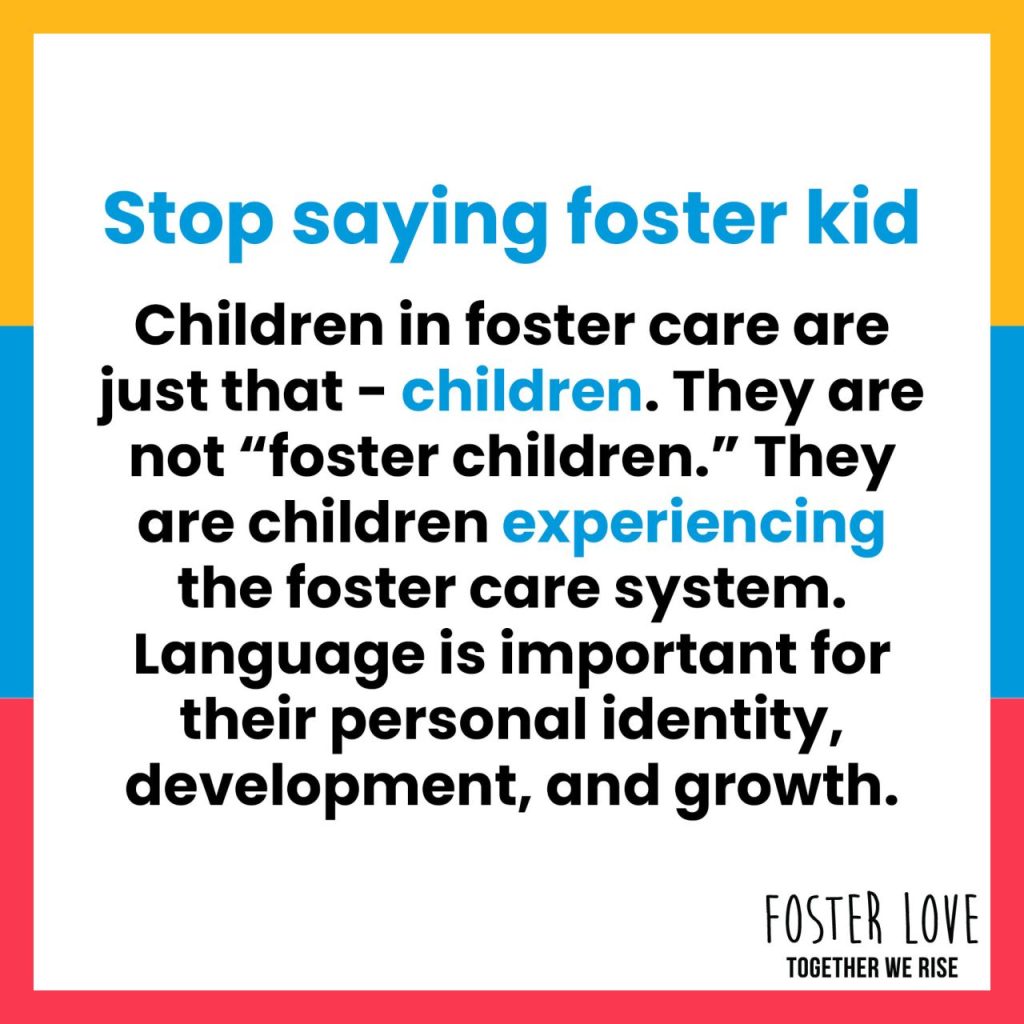
The children who come into my home arrive through foster care, but I have become increasingly uncomfortable with calling them “my foster kids.”
I am not ashamed of foster care. In fact, I am proud to serve as a respite and emergency foster care provider. Foster care serves an important purpose, and I am honored to be part of it (though I do wish there wasn’t a need for it.)
However, when children are in my home, I choose to focus on who they are rather than the circumstances that brought them there.
Language matters.
We say “foster child” before we say artist, athlete, student, sibling, comedian, dreamer, or survivor. We identify children by a system they had no control over entering rather than by who they are as people.
When a child is staying in my home, they are my responsibility. They sit at my table. They leave shoes by my door. They laugh in my living room. They cry when they are hurting. They become part of my daily life.
In every way that matters, they are my kids while they are with me.
I am not erasing or disregarding their families. I am not erasing their history. I am not erasing the fact that they may someday return to their home or move on to another chapter of their lives.
What I am erasing is the discomfort that labels create.
Some people may not understand that, but if you’ve cared for children long enough, you’ve seen it.
I’ve had children walk into my home and call me “Mom” immediately even after I’ve introduced myself as “Miss Staci”. Yet, they still choose to call me Mom. Who am I to tell them they can’t?
Again, I’m not trying to replace anyone. I never could and never want to.
Children don’t always use the word “Mom” because they’re looking for a replacement though. Often, they use it because they’re looking for comfort. Or because they’re looking for safety and want to feel like they belong somewhere.
The same thing happens in everyday moments.
When I’m at the playground and another parent comes up to me and asks about “my child,” I don’t immediately correct them. I don’t say, “Actually, this child isn’t mine.” How fair and/or uncomfortable would that be to the child standing right beside me?
I don’t feel the need to explain the details of a placement every time someone makes a perfectly reasonable assumption. In that moment, I simply accept it as a temporary fact.
When that child or children are with me, I am the one making sure they are safe. I am the one pushing them on the swing, helping them down the slide, handing out snacks, and wiping away tears.
The relationship is real, even if it isn’t permanent. Children in care spend so much of their lives being identified by what makes them different. They don’t need me to reinforce that every chance I get. What they do need is the freedom to just be kids.
They need adults who make room for belonging instead of creating distance; therefore, if calling me Mom helps them feel safe, I won’t take that away from them. And if someone assumes a child in my care is mine, I won’t rush to correct that either.
None of this denies reality, but a child’s need to belong is more important than an adult’s need to clarify. If those of us involved in foster care constantly refer to children as “foster kids,” we remind them, and everyone around them, that they are different. Most of the time we don’t even realize we’re doing it. We mean well but labels can become walls.
Children need to know they are wanted. They need to know they matter and are more than a case number, a placement, or a temporary arrangement. They need to know they belong even in the place they are put temporarily.
I understand that foster care is a legal status. There are conversations where that distinction matters and using the label is necessary. Everyday life, however, is different.
At the dinner table, on family outings, during bedtime routines, and in all of the little moments that make up a child’s day, it is personally important for me to choose something different.
I choose to call them my kids. My home won’t be another place where they are defined by their circumstances. They will simply be kids in my house.